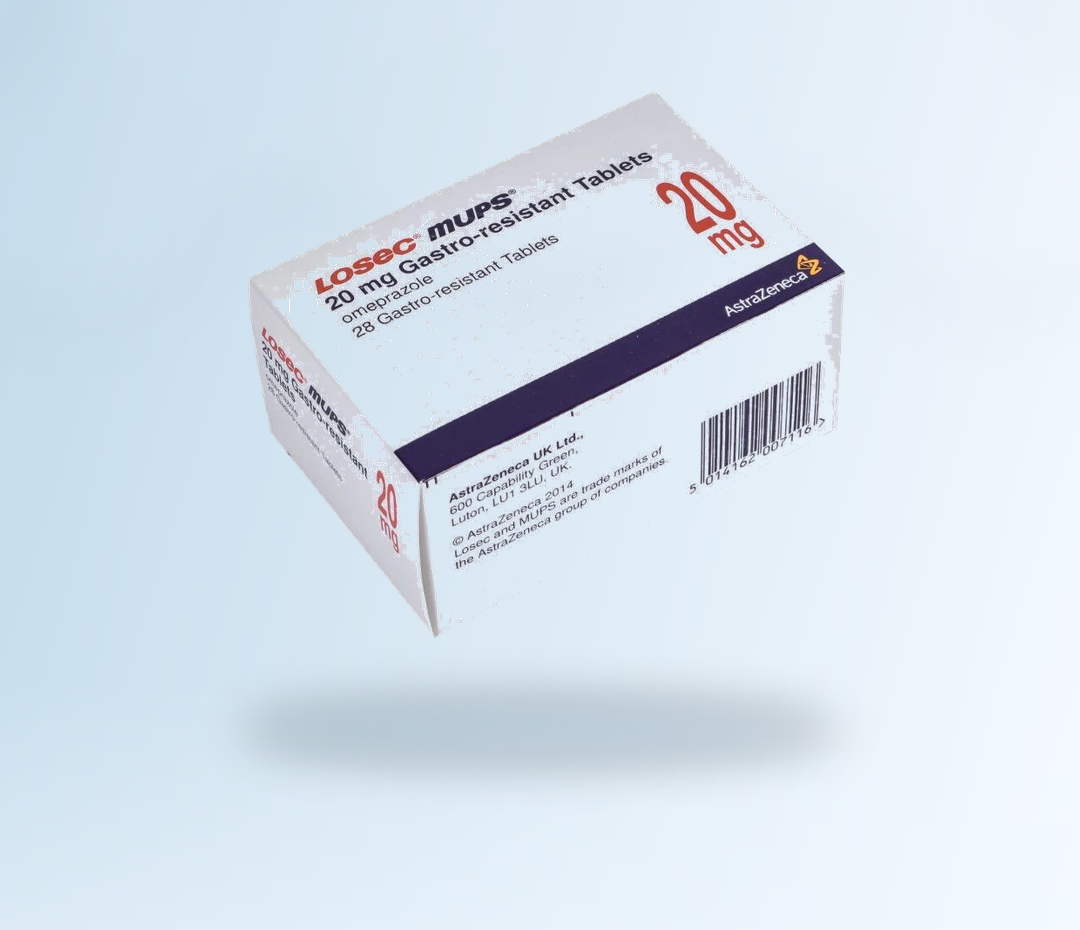
Omeprazole 20mg dispersible tablets contain the same active ingredient as standard tablets but are formulated to be dissolved in a small amount of water before swallowing. They are ideal for patients who have difficulty swallowing solid tablets. They provide the same level of acid suppression, with effects building over 2–4 days of regular use.

| Quantity | 28, 56 |
|---|
What Are Omeprazole 20mg Dispersible Tablets?
Omeprazole dispersible tablets contain 20mg of omeprazole — a proton pump inhibitor (PPI). They work by significantly reducing the amount of acid your stomach produces. The tablet is designed to be broken and dispersed in a small amount of non-carbonated water before drinking. The enteric-coated granules inside must not be chewed or crushed, as this protective layer ensures the medicine reaches the intestine without being broken down prematurely by stomach acid.
Who Are Dispersible Tablets Suitable For?
Dispersible tablets may be particularly helpful for: anyone who has difficulty swallowing whole tablets; older adults or others who prefer a tablet mixed with liquid; people with swallowing difficulties (dysphagia); and some patients needing medication via a gastric tube under clinical supervision. If you can comfortably swallow standard tablets, those are also suitable — and are typically a lower-cost option.
What Conditions Are Treated?
Dispersible tablets are used for the same licensed purposes as other Omeprazole formulations: GORD (reduces acid and supports healing), chronic or frequent heartburn, gastric and duodenal ulcers, prevention of NSAID-associated ulcers, and Helicobacter pylori eradication alongside antibiotics.
How to Take Omeprazole Dispersible Tablets
1. Break the tablet and drop it into about 10ml (2 teaspoons) of still water or another suitable non-carbonated liquid (e.g. apple juice). 2. Stir gently to disperse. 3. Drink straight away. 4. If any bits remain, add a little more water, swirl and drink again. Do not chew or crush the granules. Adults generally take 20mg once daily, 30–60 minutes before food. A different dose may be recommended following clinical assessment.
Dispersible vs Standard Tablets
Both forms contain the same active ingredient and dose, and work identically. Standard tablets are swallowed whole. Dispersible tablets are broken and mixed with liquid before swallowing. Your pharmacist will help you choose based on preference and ease of swallowing.
Q: Do dispersible tablets work the same as tablets?
A: Yes. Both contain the same active ingredient at the same dose and provide identical acid suppression. The only difference is how they are taken.
Q: Can I mix the tablet with juice?
A: Yes. The tablet can be dispersed in a small amount of still water or a suitable non-carbonated liquid such as apple juice. Drink immediately after dispersing and rinse the glass with a little more liquid to ensure the full dose is taken.
Q: How quickly do dispersible tablets work?
A: Omeprazole begins reducing acid production within 1–2 hours of taking a dose. Full therapeutic benefit builds over 2–4 days of consistent use.
Q: Can I chew or crush the granules?
A: No. The granules have an enteric coating that protects the medicine until it reaches the intestine. Chewing or crushing damages this coating and reduces effectiveness.
Q: Are dispersible tablets more expensive?
A: Dispersible tablets are typically slightly more expensive than standard tablets due to the specialist formulation. If you can swallow tablets comfortably, standard tablets are usually a lower-cost alternative.
Common Side Effects
Usually mild and temporary:
Rare but Serious — Seek Urgent Medical Attention
Do Not Take If You:
Key Drug Interactions — Always Declare All Medicines:
Long-Term Safety Note: Prolonged PPI use may be associated with low magnesium levels, reduced vitamin B12 absorption, slightly increased fracture risk, and increased susceptibility to certain gut infections. These risks are generally small and more relevant with long-term high-dose use. Regular reviews help ensure continued need and safety.
Seek Urgent Medical Attention If You Develop: difficulty swallowing, vomiting blood, black or tarry stools, severe chest pain, or unexplained weight loss.

Mulla Pharm Limited, 1 Haverflatts Lane, Milnthorpe, Cumbria, LA7 7PS
Copyright © 2026 Mulla Pharm Limited, All Rights Reserved. Company Registration No: 07821735. SEO by REM Digital