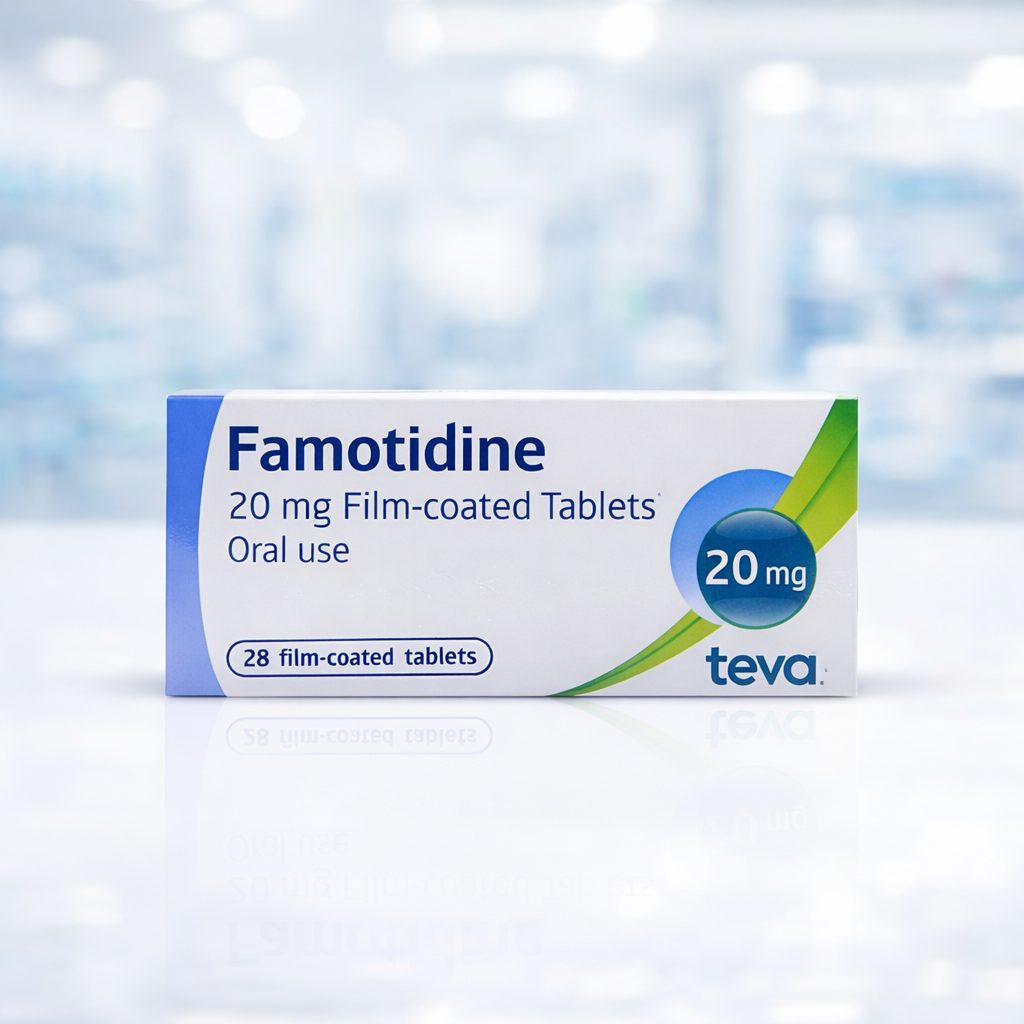
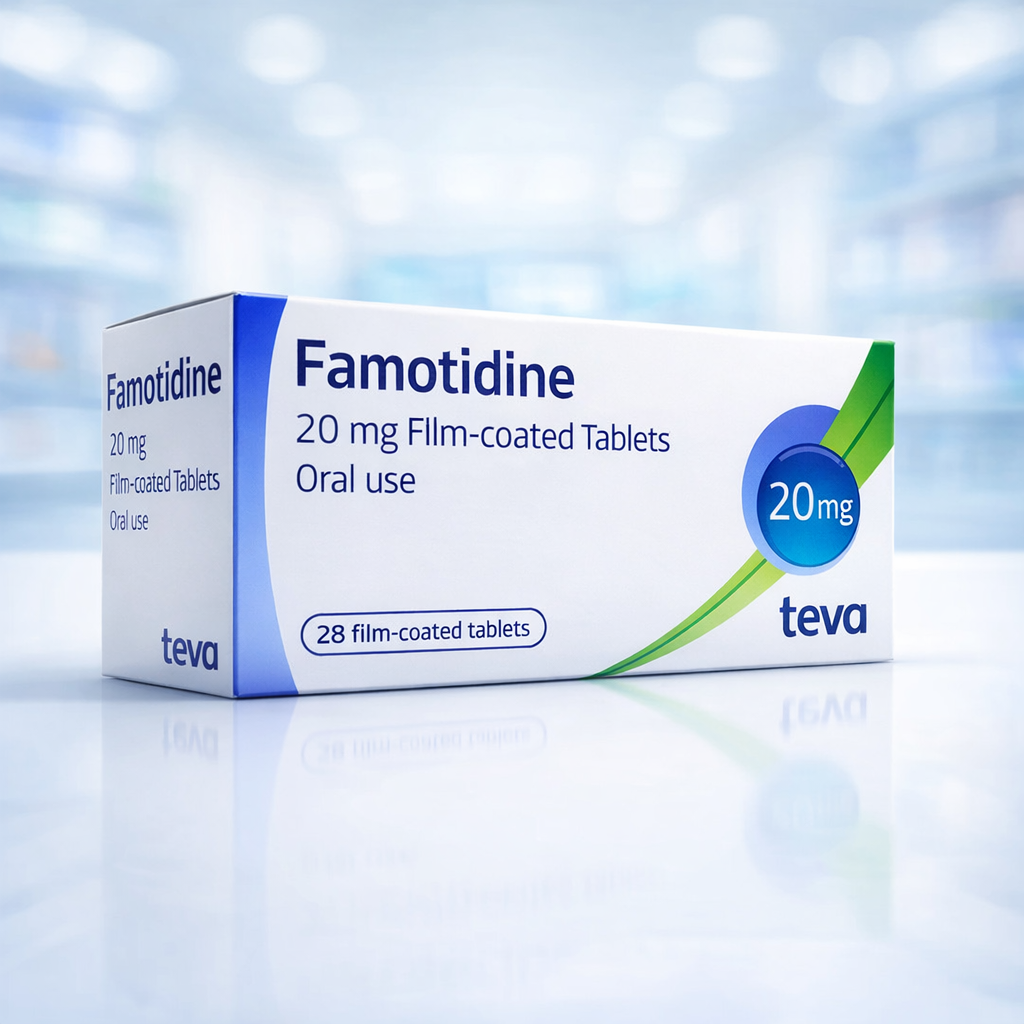
Famotidine is an H2 receptor blocker — a different class of acid-reducing medicine to PPIs. It works more quickly (often within 1–3 hours) but provides shorter-duration acid suppression. Suitable for occasional heartburn, on-demand symptom control, or patients who prefer not to take daily PPIs. Relief can last up to 12 hours from a single dose.

| Quantity | 112, 28, 56, 84 |
|---|
What Is Famotidine?
Famotidine belongs to a group of medicines called histamine H2 receptor antagonists (H2 blockers). It works by blocking histamine receptors in the stomach lining that stimulate acid production. Unlike proton pump inhibitors such as Omeprazole or Lansoprazole — which block acid production at its final stage — Famotidine works earlier in the acid production pathway. This explains the difference in speed of onset and duration of effect.
What Conditions Does Famotidine Treat?
Famotidine 20mg is used for: heartburn and acid indigestion (relief from burning chest discomfort), GORD with mild to moderate reflux symptoms, gastric and duodenal ulcers (lowers acid to promote healing), and prevention of ulcer recurrence in selected patients. Treatment decisions follow NICE guidance.
How Does Famotidine Work?
Acid production in the stomach is stimulated by histamine acting on H2 receptors. Famotidine blocks these receptors, reducing acid release. Acid suppression typically begins within 1–3 hours of taking a dose. The effect may last up to 12 hours. This makes Famotidine well suited for on-demand symptom relief, predictable reflux triggers (e.g. large meals), and intermittent heartburn.
How to Take Famotidine 20mg
The usual adult dose is 20mg once or twice daily, depending on symptom severity and clinical advice. For on-demand use, it may be taken 15 to 60 minutes before a meal or activity likely to trigger symptoms. Tablets should be swallowed whole with water. Do not exceed the recommended dose.
Famotidine vs Omeprazole vs Lansoprazole
Famotidine (H2 blocker) works more quickly but provides shorter-duration acid suppression. Omeprazole and Lansoprazole (PPIs) block acid production more completely and provide longer-lasting control — generally preferred for confirmed GORD, oesophagitis or ulcer healing. In certain circumstances, an H2 blocker may be used alongside a PPI under medical supervision. Your pharmacist will recommend the most appropriate option.
Q: How quickly does Famotidine work?
A: Famotidine typically begins working within 1–3 hours. Some people notice it works faster. Relief can last up to 12 hours, making it suitable for both scheduled and occasional use.
Q: Is Famotidine better than Omeprazole?
A: Neither is universally better — they suit different situations. Famotidine works more quickly and may be preferred for intermittent or predictable heartburn. Omeprazole and other PPIs provide stronger, longer-lasting acid suppression and are generally preferred for confirmed GORD or oesophagitis.
Q: Can I take Famotidine before a meal to prevent heartburn?
A: Yes. For on-demand use, Famotidine may be taken 15 to 60 minutes before a meal or activity likely to trigger symptoms. This makes it suitable for predictable reflux situations such as large meals or late dining.
Q: Can Famotidine be used long-term?
A: For mild reflux or heartburn, short courses or intermittent use may be appropriate. Persistent symptoms beyond 14–28 days should be reviewed by a healthcare professional. Long-term use may be suitable in certain cases but requires regular review.
Q: Are there any important interactions with Famotidine?
A: Famotidine has fewer interactions than some PPIs. However, particular caution is needed with certain antifungals (e.g. ketoconazole), HIV medicines including atazanavir, and drugs requiring an acidic stomach environment for absorption. Always declare all medicines during your consultation.
Common Side Effects
Usually mild and temporary:
Rare but Serious — Seek Urgent Medical Attention
Do Not Take If You:
Key Drug Interactions — Always Declare All Medicines:
Long-Term Safety Note: Prolonged PPI use may be associated with low magnesium levels, reduced vitamin B12 absorption, slightly increased fracture risk, and increased susceptibility to certain gut infections. These risks are generally small and more relevant with long-term high-dose use. Regular reviews help ensure continued need and safety.
Seek Urgent Medical Attention If You Develop: difficulty swallowing, vomiting blood, black or tarry stools, severe chest pain, or unexplained weight loss.

Mulla Pharm Limited, 1 Haverflatts Lane, Milnthorpe, Cumbria, LA7 7PS
Copyright © 2026 Mulla Pharm Limited, All Rights Reserved. Company Registration No: 07821735. SEO by REM Digital